
Executive Summary
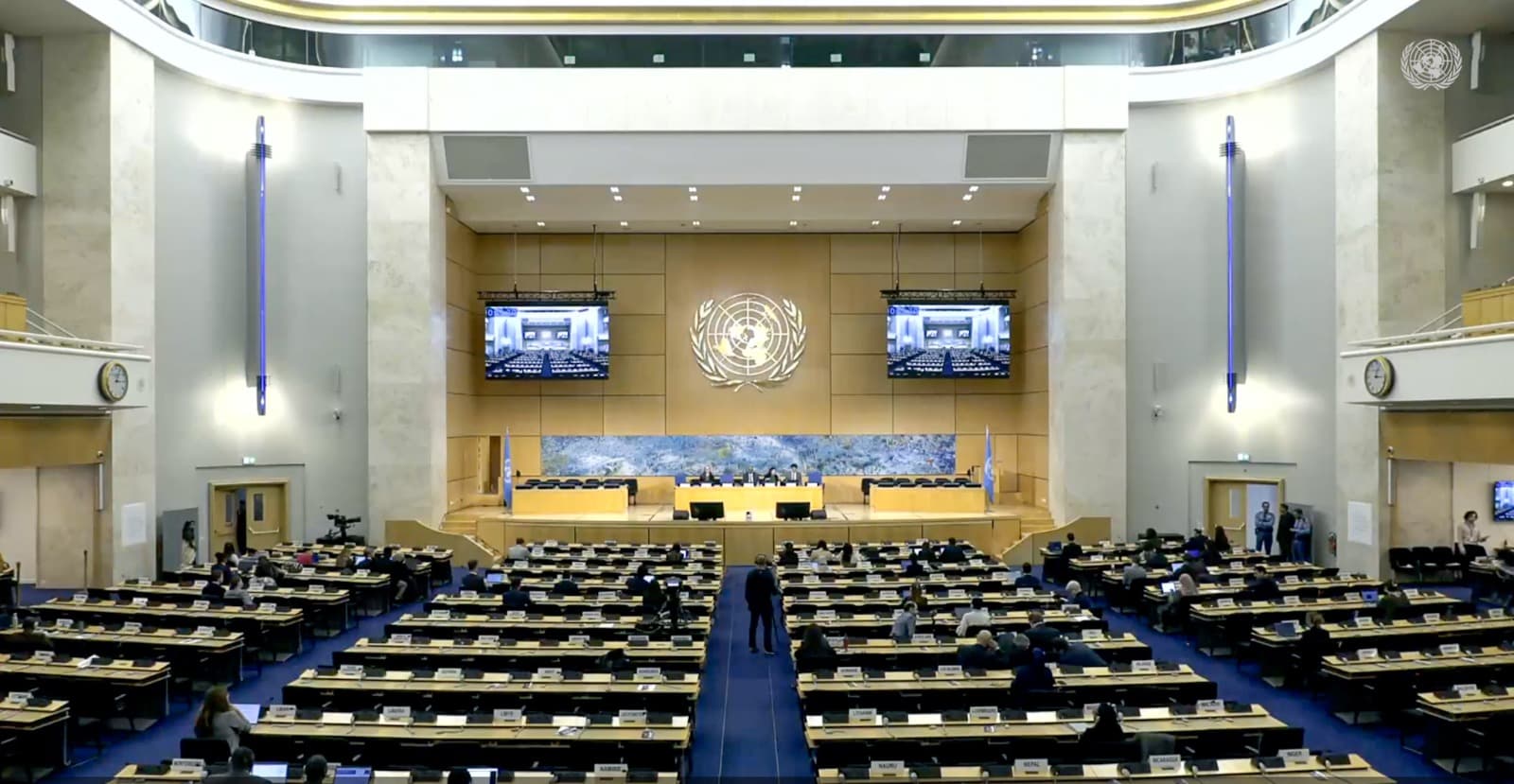
On 8 September 2026, during the 63rd session of the United Nations Human Rights Council, a side event titled “The Persecution of Hazaras and Women in Afghanistan: Forced Displacement, Arbitrary Detentions, and Pursuit of Accountability” brought together Hazara human rights defenders, survivors, legal experts, civil society representatives, and the UN Special Rapporteur on the situation of human rights in Afghanistan to examine the patterns of persecutions against the Hazaras in Afghanistan, with particular attention to the intersecting harms experienced by women and girls.
The event was co-organised by Asian Forum for Human Rights and Development (FORUM-ASIA), Accountability Watch Afghanistan (AWA), and Bolaq Analysts Network, and supported by Minority Rights Group International, World Organization Against Torture (OMCT), the International Bar Association’s Human Rights Institute (IBA HRI), International Federation for Human Rights (FIDH), and the International Commission of Jurists (ICJ). The event was also co-sponsored by the Delegation of the European Union to UN Geneva, the Permanent Mission of Finland in Geneva, the UK Mission Geneva, and the Permanent Mission of Ireland in Geneva. Speakers included Richard Bennett, UN Special Rapporteur on the situation of human rights in Afghanistan; Dr. Homira Rezai, Hazara human rights defender and representative of Bolaq Analysts Network; Hayley N. Evans, international human rights lawyer; Rahil Talash, Hazara women human rights defender; and Nargis Hasani, displaced Hazara woman from Afghanistan. The event was moderated by Ahmed Adam, from FORUM-ASIA.
During the event, the discussion highlighted an interconnected pattern of systematic discrimination, arbitrary detention, persecution, religious restrictions, repression, and violence affecting the Hazara-Shia community and women and girls in Afghanistan since the Taliban’s return to power in August 2021. Speakers emphasized that these violations cannot adequately be understood as isolated incidents or through a single analytical category. Hazara women and girls, in particular, may experience overlapping forms of harm arising from their gender, ethnicity, religion, political activity, profession, and other aspects of their identity and the surrounding environment or circumstances.
The event also explored the territorial and socioeconomic dimensions of marginalization and persecution. Forced eviction, forced displacement, and land dispossession were presented not merely as the so-called property disputes but as violations affecting rights to housing, livelihood, safety and security, identity and belonging. Moreover, survivor testimonies illustrated how the Taliban’s practices and policies can result in prolonged displacement, economic insecurity, and increasing risks for women, children and other vulnerable members of affected communities.
The legal discussion focused on the importance of assessing alleged violations within their broader factual and contextual circumstances. Depending on the evidence and applicable legal elements, certain conduct may potentially engage international criminal law, including crimes against humanity, war crimes and, in relation to specific periods and conduct, genocide. Speakers stressed that such assessments require careful investigation of acts, context, intent, organizational policy, and individual responsibility. Specifically, genocide carries a high threshold requiring proof of specific intent.
The UN Special Rapporteur, Richard Bennett, underscored the continuing efforts of his mandate to documenting and reporting on violations affecting the Hazaras and other minorities. He acknowledged that more could be done and stressed that accountability efforts should not wait for the Independent International Investigative Mechanism for Afghanistan (IIMA) to become fully operational. He also highlighted the importance of intersectional analysis and of examining how violations affect different groups and communities differently.
The discussion concluded with a series of recommendations addressed to the Member States, the UN Special Rapporteur, the IIMA, the United Nations Assistance Mission in Afghanistan (UNAMA) and other UN agencies, and civil society and documentation organizations. Specific recommendations included strengthening explicit attention to the Hazaras and minorities in the Human Rights Council’s resolution on Afghanistan, establishing dedicated monitoring and reporting mechanism, prioritizing investigations related to mass atrocities against the Hazaras and other minorities, documenting and preserving evidence, supporting accountability through competent domestic and international mechanisms, upholding non-refoulement, and ensuring that survivors and affected communities meaningfully shape protection and accountability responses.
Background and Context
Since the Taliban’s return to power in August 2021, Afghanistan’s Hazara community has faced an intensified pattern of systematic discrimination, violence and persecution. Documented violations against the minority communities, in particular the Hazaras, include forced displacement, land confiscation and dispossession, arbitrary killings, restrictions on freedom of religion or belief, discrimination in the delivery of humanitarian assistance, providing healthcare and economic opportunities, and continued attacks claimed by the Islamic State Khorasan Province (ISK-P).
The event placed particular emphasis on Hazara women and girls, whose experiences cannot be fully understood through a single lens of gender, ethnicity, religion or political identity. They are targeted as women under the Taliban’s system of gender persecution and gender apartheid; as Hazaras through ethnic discrimination and historical marginalisation; as Shia Muslims through religious persecution; and, in many cases, as activists, professionals, students, or members of families associated with protest and civic resistance.
This intersectional understanding was central to the event. Speakers emphasized that violations against Hazaras are not isolated or random. They form part of broader patterns of violence, exclusion and impunity that require sustained international monitoring, protection, documentation and accountability.
Key Interventions
1. Dr. Homira M. Rezai: Persecution and Dispossession
Homira Rezai opened the substantive discussion by situating the current situation of the Hazaras within a long historical continuum of systematic discrimination, persecution, dispossession, and violence. Speaking as a Hazara woman and human rights defender, she argued that the situation of the Hazaras since August 2021 must not be understood as isolated incidents, but as a systematic pattern of identity-based persecution.
Her remarks highlighted a range of violations facing Hazara communities, including targeted killings, attacks on schools and places of worship, forced displacement, land confiscation, religious repression, gendered violence, economic exclusion and denial of or access to justice. She noted that the Taliban takeover had created an environment of total impunity, marked by the absence of an independent judiciary, meaningful political representation, civic space, and credible protection.
Rezai drew attention to data documented by Bolaq Analysts Network[1], including “at least 36 deadly terrorist attacks and 47 documented direct assassinations targeting Hazaras between August 2021 and August 2026.” She also referred to findings from Afghanistan Human Rights and Democracy Organization (AHRDO[2]) and other civil society documentations indicating that Hazara-Shia communities have been subjected to killings and attacks on educational, cultural and religious sites, with severe consequences for health, education, mental wellbeing and economic security.
A central theme of her intervention was that the Hazaras face multiple sources and/or forms of violence. They are targeted by the Islamic State-Khorasan Province (ISKP) attacks while also facing direct repression by the Taliban, including arbitrary arrests, assassinations, crackdowns on peaceful protest, land confiscation, restrictions on Shia religious practice, and seizure or closure of Hazara and Shia civic and educational spaces. She stated that this combination of violence, state repression and impunity has created an environment in which Hazara lives, lands, faith and future are treated as expendable.
Rezai also addressed the religious dimension of persecution, noting that most Hazaras are Shia Muslims in a country ruled by the Taliban’s narrow interpretation of Sunni Hanafi jurisprudence. She referred to restrictions on Muharram ceremonies[3], pressure on Shia communities, removal of Ja’fari jurisprudence from education, raids on Shia institutions, and the recent reported seizure of the Khatam al-Nabieen complex in Kabul.
The territorial dimension of persecution was also emphasised by Rezai. She described land as central to Hazara survival, identity, history and belonging. Citing Bolaq[1], she stated that since 2021, at least 19,840 jeribs of land (approximately 4,000 hectares) with documented boundaries have been usurped or declared off-limits from the Hazaras, with additional cases reported across Jaghato, Gizab, Pato, Omid-e Sabz Township, Ghor, Bamyan, Parwan and Baghlan provinces. She argued that these are not ordinary land disputes, but forms of dispossession enabled by Taliban courts and administrative structures.
Her remarks concluded with four key recommendations: that the Independent International Investigative Mechanism for Afghanistan (IIMA) make violations against Hazaras a named priority; that the Special Rapporteur on Afghanistan prepare a thematic report on the Hazaras and other persecuted ethnic and religious minorities; that Member States recognize the serious risk and ongoing reality of the Hazara genocide; and that States uphold non-refoulement and suspend forced returns of Hazaras and other at-risk Afghanistan nationals.
2. Rahil Talash: Testimony on Hazara Women, Protest and Taliban Detention
Rahil Talash delivered her testimony on her lived experience, as a Hazara woman, under the Taliban and the longer history of discrimination faced by the Hazaras in Afghanistan. She described how as a Hazara schoolgirl, she was compelled to hide her identity, including covering her face and avoiding speaking Hazaragi, so that her classmates would not mock her for being Hazara and to escape the ridicule.
She explained how she experienced systematic discrimination at her workplace, recounting an incident in which she was denied promotion because of her ethnicity. She further described the immediate impact of the Taliban takeover in 2021. When she returned to her work at the Ministry of Information Technology with two other colleagues, Taliban officials stopped them and told them they were “the prostitutes of the Republic” and they were no longer allowed to go to work. As the only breadwinner in her family, she faced severe economic hardship and joined protests to demand basic rights and the lost income.
Her testimony described Taliban violence against women protesters, including the use of electric shockers, pepper spray and gun beatings. She later fled Afghanistan out of fear of arrest after the Taliban searched her home.
Talash also conveyed, with consent, the experiences of other Hazara women. She shared the case of Zahra,* a Hazara midwife from Herat, who was detained by Taliban officials from her workplace on 5 August 2026, after previous threats and harassment by the Taliban linked to her work, clothing and their hijab rules. Zahra reported that she was forcibly taken by female Taliban officials and later released only after payment and guarantees were provided. She has not returned to work, fearing re-arrest and forced marriage.
Talash also presented testimony from a family of Hazara woman human rights defenders: on 27 March 2024, Taliban forces entered their home in Dasht-e Barchi, Kabul, and arrested three Hazara sisters and their brother. The siblings described severe violence, torture, humiliation and threats in detention. One of the sisters stated that she was targeted not only because she was a girl and protester, but also because she was a Hazara girl. Taliban officials reportedly called her an “infidel” because she was Hazara and told her that killing and stoning her and her sisters was lawful.
This intervention underscored the compounded discrimination faced by Hazara women: gender-based persecution, ethnic discrimination, religious targeting, political retaliation and economic vulnerability. It also highlighted the urgent need for protection pathways for women human rights defenders and Hazara women at risk.
3. Nargis Hasani*: Testimony on Forced Displacement
Nargis Hasani, a Hazara woman and survivor of forced displacement from Hazara-majority province of Bamiyan, provided a pre-recorded direct testimony on forced displacement, land seizure, and the resulting impact on their human rights situation and economic, security and humanitarian needs. She described how, on 28 July 2025, the Taliban ordered her family and 25 other families, approximately 150 people in total, to leave their homes and lands. After 15 days, they were forcibly evicted by the Taliban. More than a year later, many from their families remained displaced in remote areas of the surrounding provinces.
Hasani explained that several families were original owners of the land, inherited over three generations, with the sale and registration documents available since at least three different governments. After the Taliban returned to power, Kuchis began making ownership claims over agricultural and grazing lands in Hazara-majority areas. In her community’s case, Kuchis from Paktia and Logar initially claimed land belonging to four families but eventually obtained a Taliban ruling allowing them to take control of the entire area.
She stated that although the Taliban initially rejected the Kuchi claims on the basis of documents held by the Hazara families, the authorities later supported the Kuchis. She attributed this shift to ethnic and tribal relationships between Kuchis and Taliban officials in Bamiyan, including the then-Taliban governor and the head of the provincial court.
Hasani described threats, pressure to sign unjust decisions, threats of arrest against male family members, and the eventual raid and forced removal of families from their homes. During their eviction and displacement, women, girls, children and elderly people spent 15 days in front of locked homes, under tents and in the village mosque, before fleeing into mountains and remote areas after learning that Taliban and Kuchi forces were coming to arrest them.
Her testimony made clear that forced displacement is not simply a property dispute. It is a violation of housing, land, security, livelihood and identity. The Hazara families, according to her, reached out to UNAMA office in Bamiyan and the UN Special Rapporteur, Richard Bennett, seeking their assistance, but no effective remedy was provided. She added that displaced families are facing economic hardship, fear and insecurity, and that many are forced to hide their identities and whereabouts. She called on the United Nations and international community to pressure the Taliban to stop these injustices, protect Hazara property and housing rights, ensure the safe return of displaced families, and provide safe pathways for resettlement of at-risk families to a safe country.
4. Hayley N. Evans: International Accountability
Hayley N. Evans, an international human rights lawyer, provided legal analysis, focusing on how documented violations against the Hazaras and Hazara women may be assessed under international criminal law. She emphasized that legal analysis must consider not only individual violations but also the broader pattern in which those violations occur, including whether they form part of a widespread or systematic attack against a civilian population, or whether they have a nexus to armed conflict in the context of war crimes.
She explained that, when viewed in the context of an organizational policy of actors such as the Taliban or ISKP, some alleged conduct could potentially constitute crimes against humanity, including persecution on religious or ethnic grounds, deportation, or forcible transfer of population. She also emphasised the importance of considering a wider range of possible international crimes, including war crimes.
With respect to ISKP’s targeting of Hazara-Shias and the wider Shia population, Evans noted that such conduct may amount to genocide during certain periods and therefore warrants careful investigation against the applicable legal test. She also reminded participants that genocide requires proof of a high threshold of specific intent, referring to the relevance of dehumanizing language in international criminal jurisprudence and noting that derogatory and dehumanizing language used in relation to Shias should be further examined as part of any assessment of genocidal intent.
She cited findings of a forthcoming report by Accountability Watch Afghanistan (AWA) on arbitrary detentions of women and girls,1 presenting a female interviewee’s statement from Herat, Afghanistan:
Look, when the governor and the head of education write a book and declare all Shias to be absolute infidels—when they are called infidels, it means the property and the honour of the women of the Hazara and Shia people become permissible (halal) for these people. Unfortunately, when things are like this, just think about how we can possibly be safe.
A major contribution of her remarks was the emphasis on intersectionality. She observed that there is substantial evidence concerning religious and ethnic persecution of the Hazaras, and substantial evidence concerning gender-based persecution of women. However, neither body of evidence considered separately fully captures what it means to be a Hazara woman or girl.
Documentation and accountability work, according to Evans, must carefully disaggregate alleged perpetrators, distinguish between Taliban and ISKP conduct, and focus on linkage evidence connecting potential high-level suspects or leaders to crimes committed on the ground. She also highlighted the importance of domestic courts exercising extraterritorial or universal jurisdiction, alongside the future work of the Independent International Investigative Mechanism (IIMA) for Afghanistan.
5. Richard Bennett: Reflections and the International Response
Richard Bennett, UN Special Rapporteur on the situation of human rights in Afghanistan, welcomed the event as timely and well-structured, including survivor testimony, contemporary updates, and legal analysis. He noted that although the IIMA was not yet fully operational, the discussion was not too early for the International Criminal Court (ICC), other accountability mechanisms, or his own mandate.
The Special Rapporteur acknowledged that his mandate includes monitoring, reporting, documenting and preserving information relating to human rights violations and abuses. He stated that he has reported on the Hazaras and other minorities but added that he had “not done enough” and that more should be done.
He recalled that in his first report he had noted that some ISKP attacks may amount to war crimes and crimes against humanity and that he had recommended that the Human Rights Council should establish a specific inquiry into attacks on the Hazaras and other minorities. He observed that the Council had not yet done so.
Bennett also stated that his mandate documents cases and allegations that are not always public or included in reports, including allegations of sexual violence against Hazara women in Taliban detention, forced evictions and land confiscation, and attacks near Shia mosques. He referred to his examination of Taliban decrees and instruments, including those affecting women, family life, religious preaching and minority communities.
His remarks strongly reinforced the event’s intersectional understanding of the situation of the Hazaras under the Taliban. He noted that intersectionality requires moving away from broad categories such as religion, ethnicity or gender alone, and instead examining how violations affect different people in different ways. He asked, for example, how Taliban rule affects Hazara men and Hazara women differently, and how urban Hazara residents in Dasht-e Barchi in Kabul may be affected differently from rural Hazara residents in Bamiyan.
He also analysed the Taliban’s differing public narratives on women and minorities. He observed that while the Taliban appear to openly justify discriminatory treatment of women through religious texts, they often deny discrimination against ethnic and religious minorities, framing such concerns as attempts to sow discord. He referred to the recent seizure of a Shia seminary in Kabul, noting that the Taliban justified it through a land claim rather than explicitly religious or ethnic grounds.
The Special Rapporteur concluded that the Human Rights Council could and should do more. He noted that language on Hazaras in the previous year’s resolution should be reviewed and strengthened and described the event as particularly timely for the Afghanistan resolution. In response to a question on universal jurisdiction, he added that civil society should not wait for the UN alone and that people’s tribunals and domestic accountability avenues may also play an important role.
Recommendations
The following recommendations consolidate the proposals presented during the discussion.
To Member and Observer States
- Acknowledge the history and continuing patterns of violence, discrimination, and persecution affecting the Hazaras and other ethnic and religious minorities in Afghanistan, while recognising the vulnerabilities and lived experiences of Hazara communities; give due consideration to survivors’ and advocates’ calls for recognition of these patterns, including concerns regarding the possible commission of genocide or other international crimes; treat the serious risk of further genocidal campaigns as an urgent prevention priority; support independent investigation of alleged genocide without delaying protective action pending a judicial determination.
- Strengthen the Human Rights Council resolution on Afghanistan with explicit attention to the situation of minorities and the Hazaras, including Hazara women and girls, assessing the patterns of displacement, land seizure, arbitrary detention and religious persecution; fully resource the IIMA and support a named focus on violations against Hazaras.
- Support the ICC and competent domestic courts, including appropriate universal or extraterritorial jurisdiction cases, alongside targeted sanctions and other lawful accountability measures.
- Uphold non-refoulement and suspend forced returns of Hazaras and other at-risk nationals of Afghanistan. Assess overlapping risks linked to ethnicity, religion, gender, activism, displacement and the absence of effective protection.
To the UN Special Rapporteur on Afghanistan
- Prepare a dedicated thematic report on the human rights situation of minorities and the Hazaras in Afghanistan with specific attention to Hazara women and girls.
- Continue documenting and publicly reporting on the principal patterns of abuse, and collaborate with Special Procedures on minority rights, freedom of religion or belief, violence against women and girls, and other relevant mandate holders.
To the Independent International Investigative Mechanism for Afghanistan (IIMA)
- Make international crimes including grave violations against Hazaras a named investigative priority and investigate the potential genocide case, crimes against humanity and war crimes.
- Preserve incident and linkage evidence, distinguishing Taliban, ISKP and other alleged perpetrators and connecting responsible individuals to crimes. Work with civil society and survivor groups through confidential, trauma-informed and survivor-centred processes.
To UNAMA and UN Agencies
- Strengthen monitoring and public reporting in affected areas, and engage directly with Hazara communities, women-led groups and displaced families to identify protection needs and barriers to assistance.
- Ensure assistance responds to overlapping ethnic, religious, gender and displacement-related vulnerabilities. Advocate for protection of Shia religious, educational and civic institutions.
To Civil Society Organizations
- Safely document testimonies, collect and preserve records of violations including detention patterns, forced eviction, attacks and discriminatory practices, with careful attribution and attention to the distinct experiences of minorities including Hazaras, and women and girls from minority communities.
- Consider documenting and preserving information in ways that may support future use by competent courts and investigative mechanisms, while observing informed-consent requirements and relevant protocols.
Conclusion
The interventions described an interconnected pattern of identity-based persecution: attacks and detention undermine physical security; displacement destroys livelihoods and belonging; and religious restrictions erode community life. The accounts of Rahil Talash and Nargis Hasani* showed how these harms affect daily life, while making clear that Hazara women and girls face overlapping forms of gender, ethnic and religious persecution. Protection and accountability efforts must reflect these differences rather than subsume them within general reporting on women or minorities.
The discussion linked immediate protection to rigorous investigation. Allegations must be assessed with attention to the acts, context, intent and responsibility of each perpetrator. Calls to recognize the Hazara genocide should be heard in parallel to the investigation of potential genocide, crimes against humanity and war crimes; a call for recognition, an assessment of risk and a judicial finding are distinct. None should become a reason to postpone action to protect threatened communities.
The Human Rights Council, Member and Observer States and UN mechanisms should translate these concerns into explicit monitoring priorities, adequately resourced investigations, protection from forced return and support for displaced families and defenders. Survivors and Hazara civil society must shape that response. Their participation requires sustained protection, confidentiality and a meaningful role in decisions affecting their lives.
Sources
- [1]Bolaq Analysts Network – Report on the human rights situation of Hazaras during five years of Taliban rule (August 2026)
- [2]Afghanistan Human Rights and Democracy Organization (AHRDO) – International crimes of ISKP (2016–2024)
- [3]Genocide Watch – Taliban ban Tasu’a and Ashura mourning ceremonies in Herat